West Coast Winter
March 2, 2011 | Filed Under Photography, Photojournalism | Leave a Comment
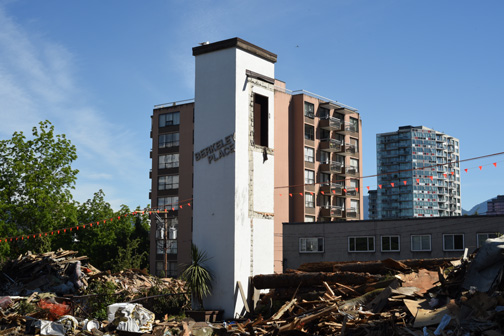
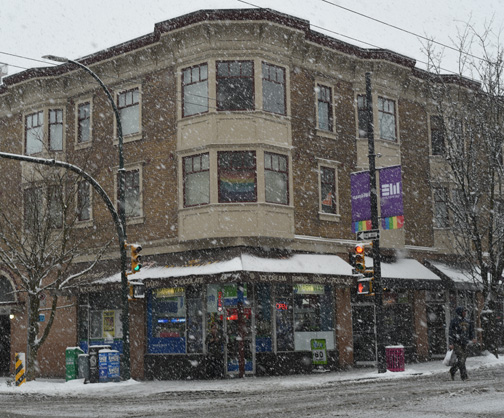
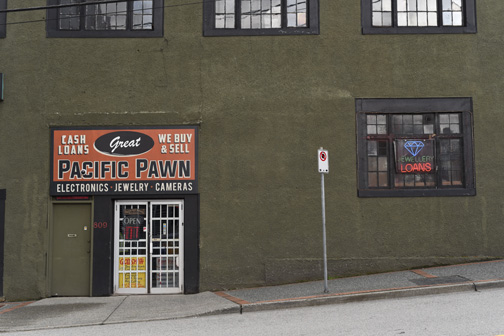
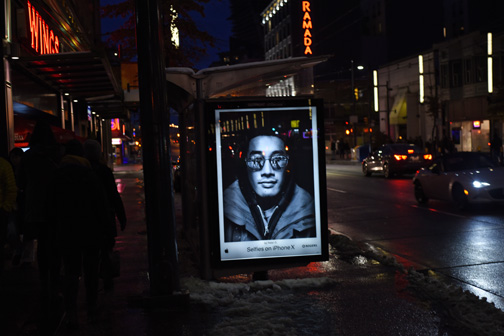
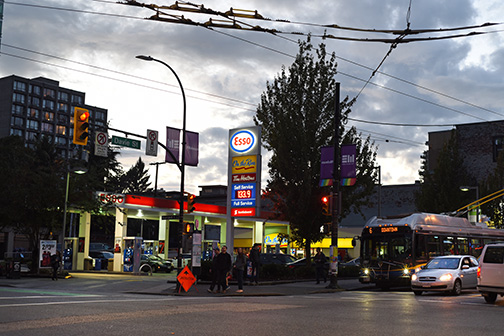
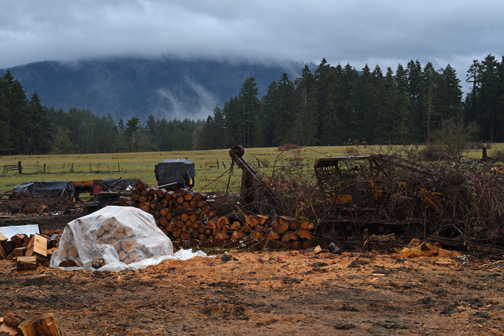
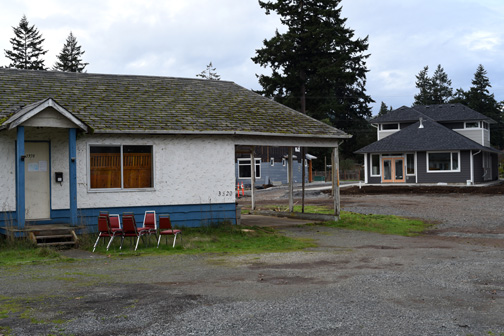
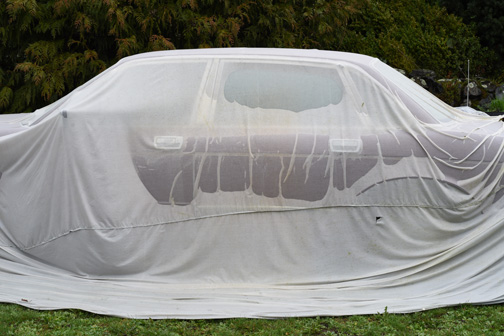
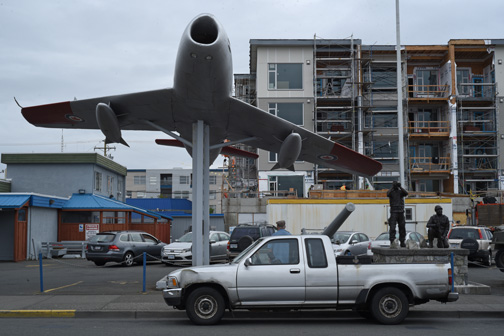
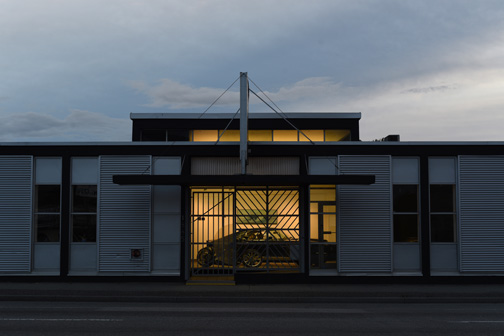
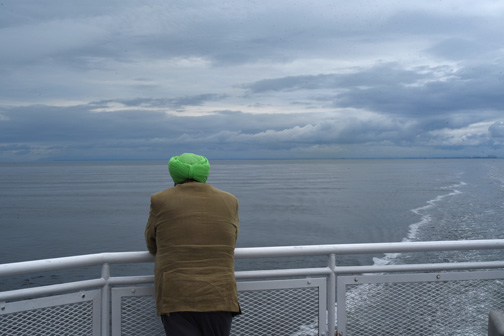
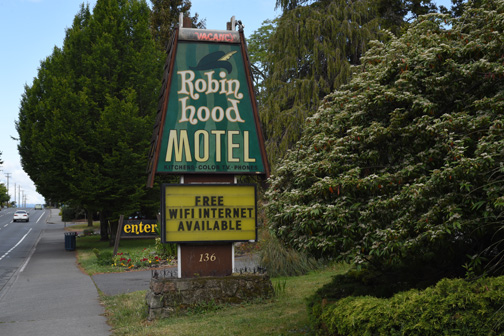
So here’s photographic proof we do get winter out here open the western edge of the world. Sure, it did only last three days but it was a hard three days.
Tim Van Horn & The Canadian Mosaic Project
December 31, 2010 | Filed Under Interview, Personal Project, Photo Studios and Work Spaces, Road Trip | Leave a Comment
I met up with photographer Tim Van Horn for a coffee today but forgot to bring a mug so I was out of luck. When you live in a small camperized van, room for everything, including extra dishes just isn’t there.
I don’t know how you’ll be celebrating the new year but for Van Horn Jan. 1, 2011 will mark 27 months on the road for the Alberta photographer and he’ll celebrate that milestone in Victoria. The 41-year-old photographer has been traveling across the country in his van photographing Canadians, 5000 so far, for his Canadian Mosaic project. His plan is to stay on the road until he captures 25,000 portraits that he will use to create a giant Canadian flag mosaic in time for the country’s 150th birthday on July 1, 2017. Van Horn, who has travelled from Newfoundland to Nunavut for his project, expects to spend the next few weeks in the greater Victoria area.
You have to admire Tim as he is doing what so many of us talk about but never get around to actually acting on, hitting the road and just working on a project, taking photographs everyday.
His work can be seen at http://celebratecanada.wordpress.com/.
Colin Corneau – Interview
December 13, 2010 | Filed Under Interview | Leave a Comment
1) How did you become a photojournalist?
The short answer is dumb luck. The longer answer is that I grew up always having a visual aptitude. Before I discovered cameras in high school it was drawing or sketching but that always seemed too slow. I’m only half-joking when I say I took up photography because I was too impatient to create a picture by drawing.
I was very lucky to have ended up going to a high school that offered a solid vocational program in photography; around that time, I became really fascinated by the idea of a photojournalist or a newspaper photographer — nothing else could possibly be as interesting as portraying real life, and things that were actually happening.
Those early days gave me the technical ability to understand how to take a picture and it pretty much was a process of learn-by-doing (ie. a million mistakes) over many years that I learned how to make a picture.
One other big stroke of luck was being in Winnipeg at a time when both newspapers had a lot of great photographers on staff. Every day I got to read the paper and see what these familiar names were doing, and that just made me want to do it more. I eventually got to know most of those names and I’m very grateful for what they taught me, mostly by quiet example.
2) You’ve worked quite a while in Brandon, Manitoba. It’s a smaller city and somewhat isolated, so what’s kept you there?
I love being a photographer at a daily newspaper. That fascination with portraying everyday life is still as valid and strong now as it was long ago. I also appreciate stability and security; I think that once basic needs are met and secured, I can then branch out and explore other interests and projects sustainably over a longer term.
There’s been plenty of angst and worry, wondering if I’m missing out on the wider world this way. But in going to conferences and talking to other photographers over the years, it occurred to me that the things they complained and worried about were remarkably similar. I’m not sure there’s any peace in this world, but I do think you can choose to be happy and fulfilled wherever you are. In recent years, I’ve honed my thoughts about the meaning of community and that’s from familiarity — those are two words that inform a lot of what I photograph and why.

3) Like many photographers you have personal projects on the go. One project you’ve been working on for a while is China. What’s the attraction there for you?
It didn’t start out as a project but I guess like the best ones, it evolved into that. I’d probably use the word “exploration” myself. I simply was curious about something and set out to learn about it. I talked to people, read as many books as I could find, devoured all the articles I could about China and Chinese culture. It was a pretty easy subject to be captivated by — an ancient culture undergoing unprecedented change, with unheard-of speed. The recent history alone of China is astounding — epic and tragic on a scale we can’t imagine here.
Just like my education in photography, I found a few happy coincidences soon into my journey. One was an exchange at the university here in my city, where a professor from Nanjing came to teach Mandarin language classes. I signed up, but ironically was interrupted by my first trip to China in late 2002. I had friends there, which helped a lot.
Step by step, over the years, one thing led to another. Since I interpret the world through photography, it was only fitting I’d apply that to experiencing China. I found a subject that I was constantly interested in, and the images I made there are very special to me, even if there was never any particular plan in making them!
I think most photographers are curious about the world. I’m curious about China and so it’s been very rewarding to combine two big passions.
4) You shoot film for the China project. Why?
When I first visited China, we only had film cameras. I’ve shot a little bit of digital over there since, but mostly it’s been film-based. When I go to China, it’s for me…I’ve never been hired or commissioned to go there (but would love that), and I’ve relied on my personal holiday time from my work to do so. I’m not complaining about that — on the contrary I’m grateful to be so lucky to have a job that allows me to pursue this interest.
Film feels tangible to me, it feels substantive. Maybe it’s just psychological but I approach things differently when I use film — perhaps more slowly or methodically. Maybe it’s just nice to have a little extra reminder that I don’t need to rush to meet a deadline. The tools themselves are different (lenses, cameras) and so the image, naturally, looks unique. That’s a big part of it.When I use film, I’m doing something for me, on my time and on my terms. It seems to set things apart, in my mind. I also like crafting an image in black-and-white, with all the rewards that come from manual labour. And, interestingly, it’s not that much extra labour, when you factor in the whole process of digital imaging from start to finish.
I’m no Luddite, I just think the world is a big enough place for both mediums.

5) Sometimes you work with a panoramic camera. What appeals to you about the format?
I’ve worked with a Widelux F7, for a series of images that eventually became an exhiibition of China photographs. I now have an XPan camera — both shoot regular 35mm film. Not every situation ‘feels’ right for this format, but it’s one that seems to suit much of my impressions of China. On a basic level, I feel like there’s so much going on in China that I can’t fit it all into a normal format.
I also really like the idea of breaking out of boundaries normally imposed on photography, even if only in format size. So much is made of new lenses, sensors, and other details of cameras that few people ever realize they’re locked into what manufacturers determine for them. I suppose a person could stitch together separate images digitally, or crop a commonly-proportioned image dramatically, but that’s a pale imitation, I think. A panoramic camera sets out from the start to make a specific kind of image — that’s what I’m interested in, because I think at certain times that’s what’s in front of me.
6) Do you print your own images? What process(es) do you use?
I do ‘wet print’ my own images in the darkroom, although I don’t want to limit myself to that. As I said, I love the craft of making a photograph by hand. I have a lot to learn about that process, but when it’s done right there’s nothing like it. They’re true individuals, each print — especially when you tone the images, as I like to do with selenium and mild sepia. Most of my photographs shot on film are printed this way.
There’s no crime in involving digital processes, to make a hybrid workflow. It depends on each image — there’s no point in retreating to stubborn dogma…whatever works, is what I’m interested in. For those times I scan in images (or for images made on a digital camera) I enlist the help of a few terrific commercial photographers I know here in Brandon, and their printers. I just can’t afford those things right now.
7) Do you have more trips to China planned?
I know I’ll go back sometime, but for now it’s probably best to pay off the bills from the last few times I went there!

8) You’re also shooting images in Brandon that are separate from your newspaper work. Can you tell us about those images?
This is my latest project, and it’s been going on for a little over 2 years now. I live in my city’s downtown, and walk to and from work each day. I got to know the community (there’s that word again) from walking daily and thought I should carry a camera to capture some of the odd things I’d see occasionally.
My favorite focal length is a 35mm lens (in 35mm format) and as cliché as it sounds for street photography I thought black-and-white film felt right. Partly, this was because I could work on it myself on my own time, and partly because of what I mentioned about my China photography — the notion of making it separate and distinct from my day-to-day work.
There was no plan or idea with this project at the outset. I simply did it for the joy and fun of making pictures…I guess it was the photographic equivalent of doodling absentmindedly on a sheet of paper.
Over time, I noticed more and more ‘moments’ and thought I may as well do something with it all. I’m still not totally sure what, exactly, that would be but for now I’m putting them on my blog (www.reservedatalltimes.com) and I think it would be fun and useful to do an exhibition at some future point.
I’ve been inspired a lot by the street photography of Fred Herzog, in Vancouver and especially John Paskievich of Winnipeg with his terrific book “The North End”. I don’t kid myself about coming close to that level of work, but I do like the idea of preserving a community and a time. It seems a lot of photography is, at one level or another, about fighting back against the relentless tide of time erasing everything. Well-crafted and passionate photography can let us hold a moment and examine it later on, and things we’d otherwise forget or even belittle can have a second chance.
On that point, I also remember a scene from Canadian graphic novelist/cartoonist Seth’s book “It’s a Good Life If You Don’t Weaken”. He had a “walk in the snow” moment where he realized his love of abandoned, decaying old buildings was tied to his lamenting the passing of time. I’m not sure if I’m quite that nostalgic, but I think that urge is behind a lot of this type of photography.
9) Are there any other projects you’re working on?
I’m on the Visual Arts committee of our local Folk Music and Arts Society, and each year we do a portrait project. It ties in nicely with my feelings about the importance of community and how the arts can help foster that. So, there’s something new each year with that.
I’d like to pursue arts grants in the future, although I’ve learned enough in my initial research to see that it’s almost a full time job applying and following up on various grants. It’s definitely not “free money” as some uninformed people might think!
Down the road, I’d like to renew an interest in wetplate collodion photography. I love the idea of an extinct process existing in the 21st century, but I’m really fascinated by its uses for portraiture as photography is a way I reach out to others.

10) Your website is currently just a cover page, will we be able to see a full website soon?
Yes, but I’m run a bit off my feet with work and other photography now. And mostly, I’m running short of funds too! I’m working with a colleague at my paper to get a site up, but my desire is that it’s visually well crafted and stand out to a graphic designer. I’d like any site I have to really be strong from a design perspective, as well as being a clear representation of my photography.
My goal is to have my site up and running early in the New Year.
BLOG – www.reservedatalltimes.com
SITE – www.colincorneau.com
Luz Gallery – Quinton Gordon and Diana Millar
November 21, 2010 | Filed Under Gallery & Workshop, Interview, Photography | Leave a Comment
Quinton Gordon and Diana Millar are the owners of the Luz Gallery.
1) Tell us about yourselves.
That’s a pretty open question but in short Diana and I have combined my background as a professional photographer, artist and instructor with Diana’s experience in event planning and business management. We are both originally from Ontario but we met here in Victoria four and a half years ago, and when our daughter Molly was born almost three years ago, we decided to try to make Victoria our home. That decision meant looking at some creative solutions to achieve our career aspirations.
2) Why start an art gallery that features photography?
For me the choice to focus on photography was easy, and for Diana it represented an exciting new challenge at a time when photography is really coming into it’s own within the international fine art market.
3) What was involved in creating the gallery? How much research did you do before actually making the decision to move ahead with your idea?
Well, in many ways the research began 15 years ago with my first thoughts of creating a gallery and centre of photographic arts during a five month period of travelling and photographing personal projects. Then in 2005 I was inspired by my experience at the Manuel Álvarez Bravo Centre for Photography in Oaxaca, Mexico and in 2008 we made the decision not to move back to Toronto and that sparked a decision to see if we could create Lúz. We spent a year developing our ideas and looking at the range of photographic galleries and centres of photography around North America, but it was also a case of just forging ahead to realize our combined vision.
4) You’re much more than a gallery. You offer workshops, custom printing, sell photo printers and photo papers. Why do all that extra work? Wouldn’t it be easier to just concentrate on the gallery itself?
Easier yes that’s an understatement! We have a lot of balls in the air each day but even if we limited our endeavours to just the gallery it would still be a lot of work. There are two very compelling reasons to be more then just a photography gallery. The first is tied to our vision of building a stronger local and international photographic community, and the second is economic, the business would not be sustainable without several revenue streams, and even with those in place we are working in a community of just eighty thousand. There is no question that this would be easier if we have a larger population base.
Establishing a credible fine photographic gallery in the international market takes a long term vision of at least three to five years, and locally the buying market for photography is only just beginning to mature. In order to support a successful business model we had to balance the interests of both collectors of photography, with practitioners of photography by blending the exhibition and sale of fine photography with courses, seminars and quality retail services such as our digital print studio and the Tricera / Epson store.
5) Why do you think workshops are important?
We believe in the value of people learning and challenging themselves creatively and workshops are a great way to learn from a good instructor as well as from the other participants. This coming together of like minded people helps to reinforce the sense of community and we have seen how people who meet at our workshops continue to share ideas and communicate afterwards.

6) What has been the most important thing you’ve learned about running a gallery since you first opened?
That despite being a new gallery in an out of the way city, we can be part of a larger community and that like most successful businesses here we have to reach out to that larger community.
7) What advice would you give to a photographer wishing to have an exhibit with Luz?
This is a great question because we get people contacting us all the time and we want to encourage this, but it is helpful if they are well prepared.
Their starting point should be to read the submission guidelines published on our website. It is really hard when people just walk in off the street because as you pointed out earlier we are very busy running the various aspects of Lúz and as a general rule it is best if they introduce themselves by sending a submission package that includes their CV, a printed promotional piece, an artists statement and a carefully selected set of samples from the body of work they wish to show. Artists also need to realize that they need to develop a relationship with a gallery and that it takes time and effort to do so. The effort put in by an artist over time is part of the screening process. Rarely do things happen quickly for new artists. It can be different when we are approached by an established artist but even then we are planning well in advance.
We make a significant investment of time, money and energy when we mount an exhibition and it means that artists need to show us that they are serious about what they are doing and that they are making a significant investment in their work. Naturally it is important that we like their work and that we feel we can sell their work to our clients. It’s really helpful if they have published a book as well. Book sales are out pacing print sales and this can go some way to helping us recover the investment made in the exhibition.
Our exhibition calendar is scheduled roughly a year at a time and we try to balance juries shows with solo exhibitions of work by both established and emerging artists. We have 2011 basically nailed down now and we are looking to 2012. Now that we are going into our second and third years, the gallery has a growing international reputation and we are attracting established names from the US, Europe and Asia as well as across Canada so the competition for exhibition space is getting more challenging. We do want to support local artists and our juried exhibitions can be a great way for newer artists to start working with us. We are trying to put out at least one call each year for submissions to juried group shows and these shows are very helpful for artists to have on their CV.
Can you talk about the idea of the gallery as a community centre for photographers?
Here again you raise an important question. We are working hard to create a place where people can engage with photography through opportunities to see diverse work of a high calibre was well as a place to learn, and even a place to meet and connect with one another. As such it is significant that people understand that we don’t receive any government funding and that the cost of creating and delivering on what we offer is high. In order to keep our products and services affordable we set very tight margins on our pricing so if what we have created is valuable to the community then they need to support through purchases or even through donations made at our openings or events.

9) The gallery has led to some new opportunities for both of you. What are some of those opportunities?
Part of our motivation in opening Lúz was to be able to live here in Victoria while continuing to engage with the international photographic community. From the outset we have been focused on our belief that there is a place for Victoria in the international photography market and through Lúz we have been able to meet and collaborate with people such as Donald Weber, Stella Johnson or Joni Sternbach along with many others. It is also providing us with more travel opportunities as we add destination workshops in locations that interest us. Diana has been invited to be one of the portfolio reviewers at Photo Lucida in April 2011 and it is a huge honour for her to participate at this level, in effect she has been called up from the “farm team” to hit in the major league.
10) What trends are you noticing in photography being exhibited and offered for exhiibtions?
Well it depends on where you look, but for us the emphasis on contemporary photography challenges the divisions between documentary and fine art. Colour photography is playing a key role for many contemporary artists and for those working in B&W there is a lot of interest in fine traditional printing techniques.
11) What would be the dream exhibition you would each show?
One that sells out on opening night!
12) If price was no object what print would you each buy?
That’s tough, our list is pretty long, although (Quinton) I have always wanted a print of Avedon’s or Cartier-Bresson. (Diana) I have an answer for a print I would buy – Harry Callahan, more like the collection – too hard to pick just one. Also the Yangtze project from Nadav Kandar has produced stunning images, that I would love to add to my collection.
The thing is that we work with and appreciate so many wonderful contemporary photographers that it would be an insurmountable challenge to select just one… I guess if money was no object we’d choose to support many artists and collect several works.
13) What do you see for the future of the gallery?
We work on our future every day, and frankly some days that means just figuring out how to keep it going. But aside from that it is a matter of getting to the point where we can consistently deliver the level of exhibitions, courses, and facilities we have in mind. We are adding more destination workshops and expanding our partnerships with other organizations such as Leica and Epson or festivals like Photo Lucida to facilitate growth. In terms of future expansion we would like to see this include more dedicated classroom space and a dedicated studio for teaching and rentals, a digital teaching lab and darkroom space. On the gallery front we are working to develop relationships with collectors so we can be more effective for the artists we represent.
We are also very motivated to increase our publishing ventures both online and in print and I am working toward launching Lúz Journal, a magazine of photography similar in concept to Dispatches or burn magazine founded by David Alan Harvey. We will initially publish online but I am a huge advocate of print and this remains my ultimate goal along with more publishing collaborations with our photographers to produce limited edition books.
We have ideas about introducing memberships or raising more funds through donations of money or equipment – of which we have received some already – but to do all of this we need to expand our human recourses and this is happening slowly with Dave Aharonian and Karen Iwachow coming onboard. Eventually we will work to expand our facilities but with the high price of real estate in Victoria it will take sometime to get there.Rright now we have our sights set on trying to pay next months rent.
You can check out the Luz Gallery’s exhibitions and workshops here. You can take a look at Quinton’s photography site here. You can listen to a recorded interview with Quinton by Portland photographer Lauren Henkin at her Photo Radio site here.
Wilf Schmidt and The Little Photo Shop – Photographers’ Work Spaces and Studios
March 29, 2010 | Filed Under Gallery & Workshop, Interview, Photo Studios and Work Spaces | 6 Comments

I was in Kamloops this past weekend, the first time I’ve spent anytime there in at least three years. One of the last times I was there I’d come across this gallery/store on 3rd Avenue run by photographer Wilf Schmidt and I was curious to see if he was still there, and he was. Schmidt calls his place The Little Photo Shop and claims it’s “The World’s Smallest Photography Supply Store’. The former high school photography teacher sells prints of his own work but also stocks black and white film, Holga cameras and has a group of pinhole cameras in the back of the shop as well as other photo odds and ends. It’s a very cool space and it’s tiny which just adds to the charm. The shop is currently a little more crowded than usual as he is selling off his darkroom equipment and has the boxes stacked there. Hidden behind him is an antique safe, part of the original furnishings in the heritage building his store is located in.

Wilf in the ‘office’ section of his shop.

Wilf shows off a tiny camera that actually works. It originally came with rolls of film.

A few of Wilf’s photographs
Day 1 2010 Olympics
February 10, 2010 | Filed Under 2010 Winter Olympics | Leave a Comment

A travel day, my son Nick dropped me off for the 9am ferry, then bus to the Bridgeport Station and Skytrain downtown. A walk to the main media centre for what I thought was a 1pm photog’s press conference that turned out to have been moved to 10am. A wander through the press centre to get oriented and an opportunity to say hello to a number of photographers I hadn’t seen in ages. These big events are always a chance to catch up with people you haven’t seen in a long time, some a very long time. Then I had to Skytrain out to Burnaby carrying all my gear so I could drop off my clothes at my son Spencer’s . It’s a short walk from the station to his house, a short walk provided you aren’t carrying a ton of gear and clothing and it doesn’t start to rain which it did. Now I’m almost dry again so I’ll hop back on the Skytrain ( we get free transit rides with our media passes, thank God) and head downtown and see what else I can find out is going on and/or to shoot.

Calgary’s The Camera Store’s Peter Jeune, a volunteer in the photographer’s corrall

In from Toronto, the Star’s Steve Russell and the Globe’s Fred Lum

Vancouver’s Wendell Phillips

Victoria, BC native Greg Bos is a Reuter sports photo boss based in London, England

Reporters at work in the main press centre at Canada Place in Vancouver
Jordan River Winter Surfing
January 2, 2010 | Filed Under Personal Project, Photography, Photos, Sports | 1 Comment
Just another Vancouver Island winter day with the surf kicking up along the coast. Lots of surfers and kayakers out on the water. Weather ranged from pouring rain to a light mist although the sun came out on the drive home (typical). Word was spreading about the waves as more and more surfers were turning up throughout the morning.

Surfers head out

Beautiful BC wheel cover and surf board

Boarders and kayakers on the water

Waiting for the right wave

Catching a wave

Stand up surfer paddles back out

Surfers walk along highway

Dog on the beach, surfer on a wave
On Conscientious
November 10, 2009 | Filed Under Personal Project | Leave a Comment
It was more than a pleasant surprise today during my daily check of photo sites to click on Joerg Colberg’s Conscientious site and see one of my photos from the Salt Water &Rain project.
It was especially heartening as this is one of the first projects where I’ve moved away (or at least I feel like I have) from my newspaper photojournalism background.
The project is based on the idea that despite increasing globalization and commodification of culture we are all, no matter where we live, still strongly shaped and given identity by our landscape and weather. Those two factors work to keep us distinct. Living on the western edge, actually off the western edge, of Canada on islands, surrounded by the ocean and often, certainly in the fall and winter months, living in the rain and fog does affect how you live.
These photographs are an attempt to look at and understand that effect.


Prime Minister’s Controls Over Photographers Grows
November 7, 2009 | Filed Under From the Newspapers | Leave a Comment

An interesting article in the Globe and Mail regarding the growing control by Prime Minister Stephen Harper’s office over the photo coverage of the PM.
Here’s the lead on the article:
Minutes after Stephen Harper finished his now-famous rendition of With a Little Help from My Friends , the Prime Minister’s Office e-mailed Canadian media an arresting close-up shot of what it described as the gala piano performance.
Only it wasn’t.
The picture, which featured Mr. Harper framed by dazzling theatre lights, was actually snapped by a PMO photographer at a private rehearsal hours before the Oct. 3 evening concert.
My photo above was from a brief photo opp in Victoria a few weeks ago where photographers did have access.
Olympic Torch Run In Victoria
November 5, 2009 | Filed Under Uncategorized | Leave a Comment
The Olympic Torch Run started it’s trek across Canada in Victoria with a lot of ceremony but luckily very short speeches in front of the Legislature.

Olympic medalists Simon Whitfield and Catriona Lemay-Doan light the first torch

Premier Gordon Campbell signals success as VANOC CEO John Furlong lights a cauldron with the Olympic flame brought over from Greece

Esquimalt Chief Andy Thomas holds up the Olympic flame inside a lantern at the start of the ceremony

School children watch as athletes leave with the torch
Don Denton is a photographer, photo editor and photo coach who lives in Victoria, British Columbia.