UVic Documentary Photography Course Done

April 11, 2012 | Filed Under Gallery & Workshop | Leave a Comment 

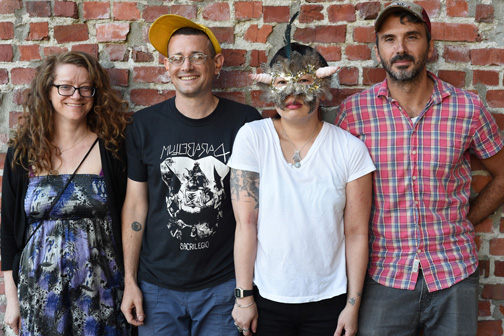
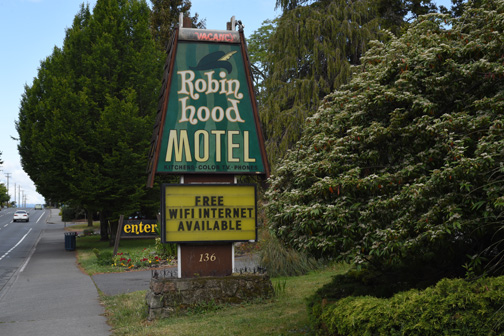
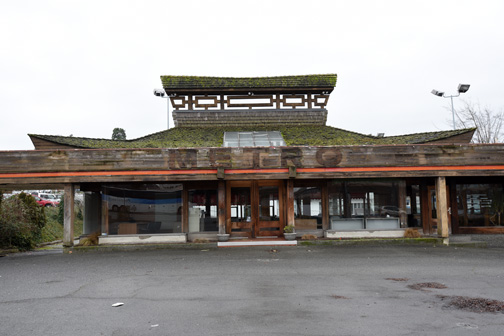
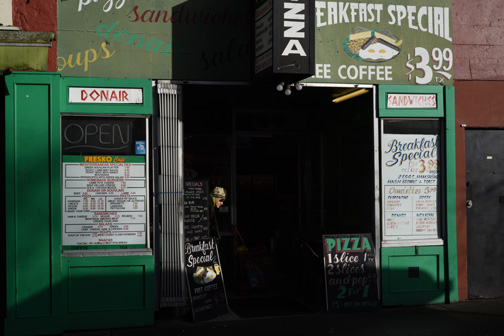
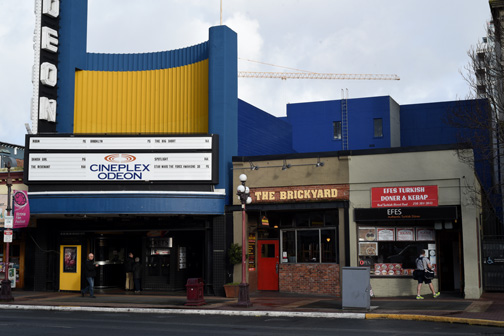
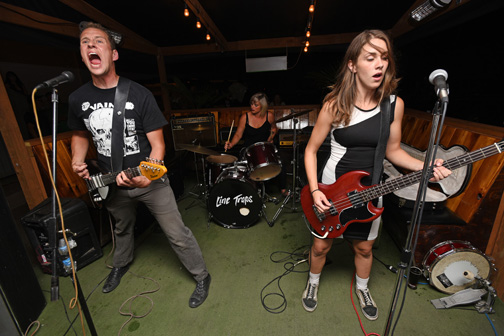
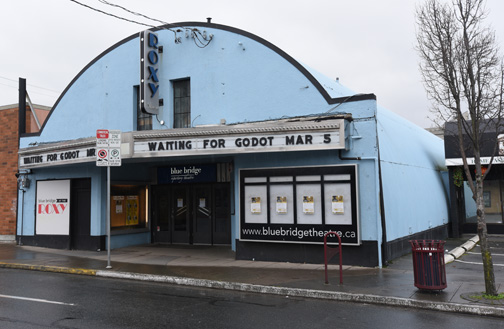
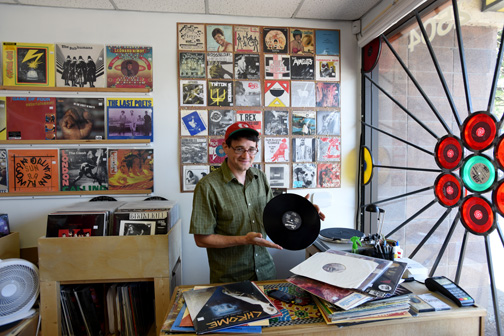
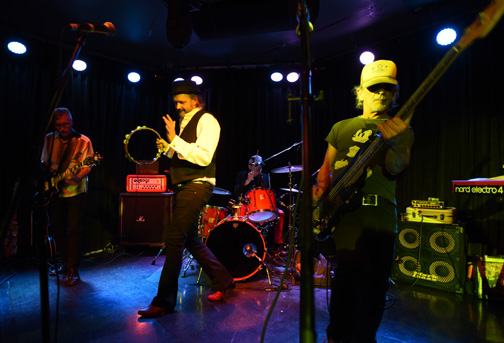
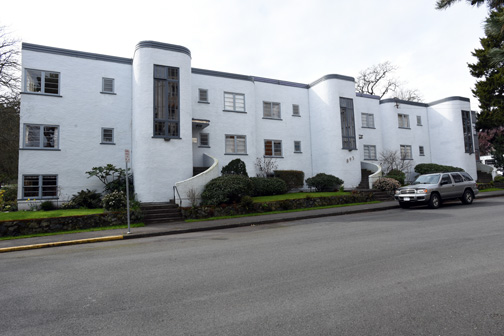
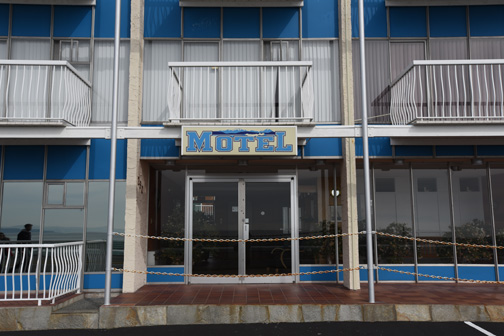
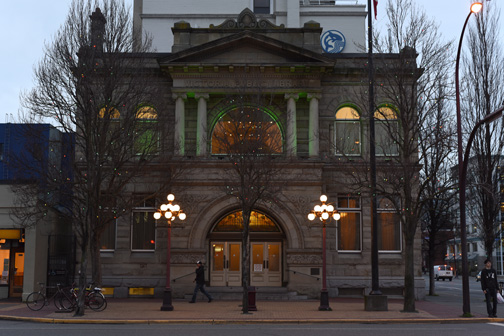
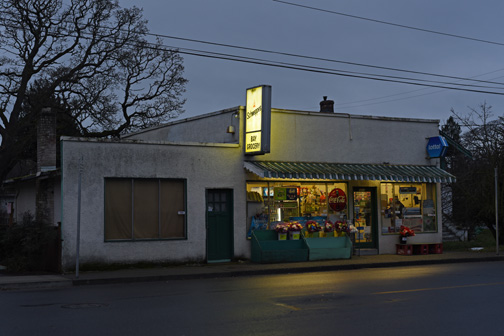
I’ve just finished up the documentary project class I was teaching as part of the University of Victoria’s Continuing Education program. The first time for continuing ed and it was a great experience. A small class but enthusiastic and everyone ended up working on a great project of their choice. The best part of teaching for me is watching the students’ confidence and skill improve through the duration of the course. We ended up with a real variety of projects and some amazing individual photographs. I’ve got another proposal in for a fall course at UVic. I’ll post the details when I know it’s a go. It’ll be  a very different photo offering.


Recent images

April 1, 2012 | Filed Under Daily Work | Leave a Comment 

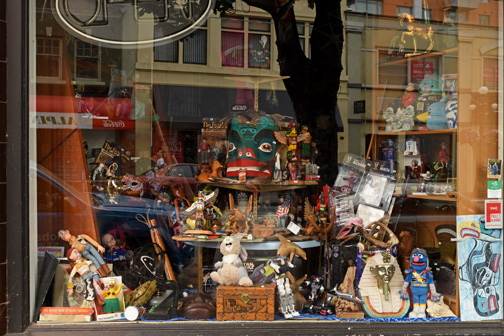
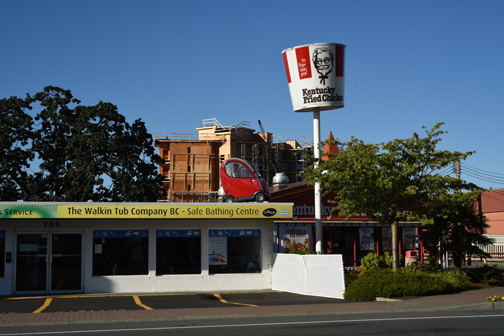
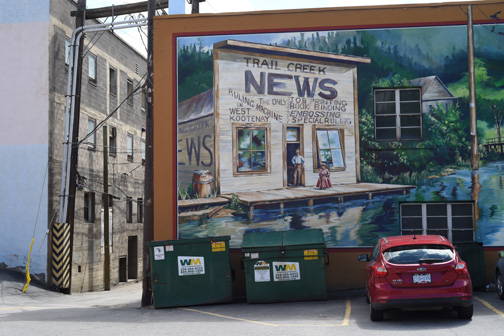
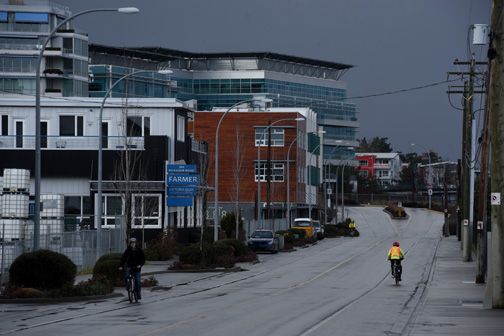
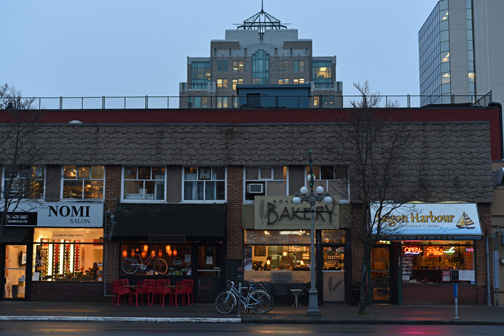
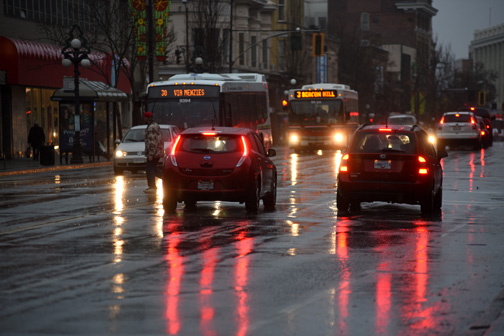
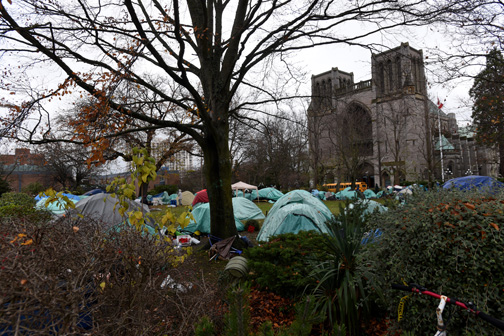
It’s been a while since I’ve posted. It always seems to be the last thing I get to. Here’s some recent images.


Wet for Charity

December 14, 2011 | Filed Under Daily Work | Leave a Comment 

You have to love university students, raising money for charity with a dunk tank in December, even on the west coast it’s cold when you hit the water.


Photography Courses at the University of Victoria

December 5, 2011 | Filed Under Workshop | Leave a Comment 

I’ll be teaching two courses for UVic Continuing Studies in the new year.

Introduction to Community Newspaper Photojournalism
This course is for photographers considering a career in photojournalism, bloggers who want to improve the visual content of their sites and for the photographer who wants to explore new avenues of creativity. Participants will study the five main types of photo assignment for the community photojournalist: news, sports, feature, environmental portrait and the photo essay. You will examine the images of working photographers, learn workflow and editing techniques and be given assignments to complete between classes.

and

Documentary Photography: Creating the Personal Project
In this course you will learn how to use the techniques of documentary work to create a personal photo project. Participants will examine the work of other documentary photographers and see how and why certain ways of seeing and photographing can be applied to their work. You will learn how to organize your own projects, budget time, find out how to edit a project and discover different ways to bring that project to a larger audience.

full details here: http://www.uvcs.uvic.ca/


Mike Andrew McLean – Thirty-Five thousand Forty at Open Space

November 15, 2011 | Filed Under Exhibition | Leave a Comment 

An eye and mind boggling exhibit by Mike Andrew  McLean at the Open Space gallery in Victoria. Here’s the intro from the gallery’s web page:

Thirty-Five Thousand Forty
Mike Andrew McLean
November 10 to December 10, 2011
Opening November 10 at 7:30 p.m.

Thirty-Five Thousand Forty is the physical culmination of Mike Andrew McLean’s project to shoot ninety-six photographs a day for three hundred and sixty-five consecutive days. McLean’s year of photos, now printed as 4”x6” snapshots, will tile the interior of Open Space, forming a sprawling record of the artist’s life from June 2010 to June 2011.

McLean writes “photography in the digital era is developing its own language, forging unique processes and technologies. It seems to have reached the democratic potential that George Eastman predicted one hundred years ago, when he took the process out of the studio of the trained craftsman and put it into the hands of the unskilled hobbyist.” McLean turns the idea of digital photography inside out, conferring an analogue physicality and monumentality onto a format that proliferates effortlessly, flooding websites, Facebook, memory cards and hard drives in an unimaginably deep cloak of images.

———————

Note the final photo posted here. Dan Milnor snaps a photo of a 2G hard drive mounted on the gallery wall. All the photos in the show are stored on that one drive.


Don Denton and T. J. Watt Exhibition Opening at Dales Gallery

November 14, 2011 | Filed Under Exhibition | 1 Comment 

Here’s a few images from the opening last week of  the joint photo exhibition for T. J. Watt and myself called Seeing The Forest For The Trees at Dales Gallery in Victoria’s Chinatown. The show, See The Forest For The Trees, runs until November 25.


Vancouver Island Ships

June 1, 2011 | Filed Under Photography, Photojournalism | Leave a Comment 

A lighthouse, small naval ship and a fully loaded container carrying freighter heading towards the open Pacific Ocean. Just another Vancouver Island seascape.


West Coast Winter

March 2, 2011 | Filed Under Photography, Photojournalism | Leave a Comment 

So here’s photographic proof we do get winter out here open the western edge of the world. Sure, it did only last three days but it was a hard three days.


Artist Rachel Berman – New Project Featuring Environmental Portraits

February 12, 2011 | Filed Under Arts, Personal Project, Portrait | 2 Comments 

Every year I like to start at least one new project. I like to have a number of projects going at the once as I find that due to my full time shooting job my time for personal shooting is limited in both hours and time of day. Having a number of projects means I can usually shoot something in the windows that I have.

So, this year, adding to the mix is a series of environmental portraits of artists. I’ve done a large project featuring images of writers but hadn’t really worked on that much in the past couple of years. I wanted to introduce a new portrait project and figured focusing in on visual artists would be both interesting and challenging and would also have the side benefit of not only meeting new people but I’d get to see a lot of art.

I’ve started off with artist Rachel Berman who is local again after a couple of years in Toronto. I’d never met her before the session but had admired her work so called her up, explained what I was doing and we set up a time to meet.

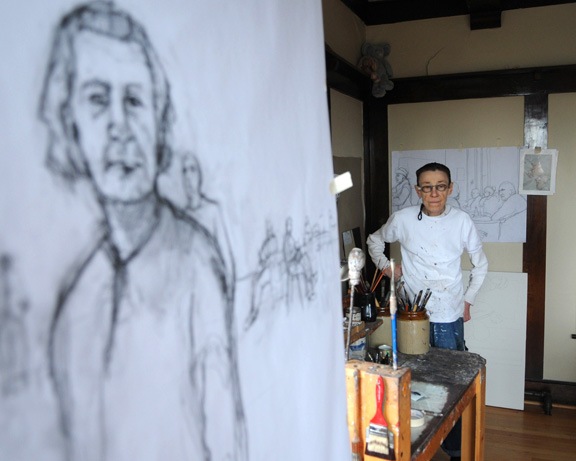
Rachel works out of her apartment studio, a great place in an older building with bay windows that let in a ton of light. She was busy working on two projects, illustrations for a book and a show at her Toronto gallery.

A bonus at this shoot was the presence of Karl Spreitz, a long time local artist, photographer and member of the Limners, a long time Canadian art collective. It was my first time meeting Karl as well and I took the opportunity to enquire about photographing him at some point. Karl, as mentioned, is a stills photographer as well as a documentary filmmaker and he was busy shooting and filming during part of my portrait session.

I spent about an hour with Rachel, taking photographs, but also chatting and getting to know each other a bit.

I took Rachel a couple of prints last week and she seemed pleased with the images. It was, from my viewpoint, a successful shoot, I had a few frames I’m happy with. I got to meet two new creative people and I’ve got another project underway.

Rachel is represented by the Ingram Gallery in Toronto and Granville Fine Art in Vancouver. Toronto artist Sara Sniderhan has painted a portrait of Rachel that you can see HERE.


Luz Gallery – Quinton Gordon and Diana Millar

November 21, 2010 | Filed Under Gallery & Workshop, Interview, Photography | Leave a Comment 

Quinton Gordon and Diana Millar are the owners of the Luz Gallery.

1) Tell us about yourselves.

That’s a pretty open question but in short Diana and I have combined my background as a professional photographer, artist and instructor with Diana’s experience in event planning and business management. We are both originally from Ontario but we met here in Victoria four and a half years ago, and when our daughter Molly was born almost three years ago, we decided to try to make Victoria our home. That decision meant looking at some creative solutions to achieve our career aspirations.

2) Why start an art gallery that features photography?

For me the choice to focus on photography was easy, and for Diana it represented an exciting new challenge at a time when photography is really coming into it’s own within the international fine art market.

3) What was involved in creating the gallery?  How much research did you do before actually making the decision to move ahead with your idea?

Well, in many ways the research began 15 years ago with my first thoughts of creating a gallery and centre of photographic arts  during a five month period of travelling and photographing personal projects. Then in 2005 I was inspired by my experience at the Manuel Álvarez Bravo Centre for Photography in Oaxaca, Mexico and in 2008 we made the decision not to move back to Toronto and that sparked a decision to see if we could create Lúz. We spent a year developing our ideas and looking at the range of photographic galleries and centres of photography around North America, but it was also a case of just forging ahead to realize our combined vision.

4) You’re much more than a gallery. You offer workshops, custom printing, sell photo printers and photo papers.  Why do all that extra work? Wouldn’t it be easier to just concentrate on the gallery itself?

Easier yes that’s an understatement! We have a lot of balls in the air each day but even if we limited our endeavours to just the gallery it would still be a lot of work. There are two very compelling reasons to be more then just a photography gallery. The first is tied to our vision of building a stronger local and international photographic community, and the second is economic, the business would not be sustainable without several revenue streams, and even with those in place we are working in a community of just eighty thousand. There is no question that this would be easier if we have a larger population base.

Establishing a credible fine photographic gallery in the international market takes a long term vision of at least three to five years, and locally the buying market for photography is only just beginning to mature. In order to support a successful business model we had to balance the interests of both collectors of photography, with practitioners of photography by blending the exhibition and sale of fine photography with courses, seminars and quality retail services such as our digital print studio and the Tricera / Epson store.

5) Why do you think workshops are important?

We believe in the value of people learning and challenging themselves creatively and workshops are a great way to learn from a good instructor as well as from the other participants. This coming together of like minded people helps to reinforce the sense of community and we have seen how people who meet at our workshops continue to share ideas and communicate afterwards.

6) What has been the most important thing you’ve learned about running a gallery since you first opened?

That despite being a new gallery in an out of the way city, we can be part of a larger community and that like most successful businesses here we have to reach out to that larger community.

7) What advice would you give to a photographer wishing to have an exhibit with Luz?

This is a great question because we get people contacting us all the time and we want to encourage this, but it is helpful if they are well prepared.

Their starting point should be to read the submission guidelines published on our website. It is really hard when people just walk in off the street because as you pointed out earlier we are very busy running the various aspects of Lúz and as a general rule it is best if they introduce themselves by sending a submission package that includes their CV, a printed promotional piece, an artists statement and a carefully selected set of samples from the body of work they wish to show. Artists also need to realize that they need to develop a relationship with a gallery and that it takes time and effort to do so. The effort put in by an artist over time is part of the screening process. Rarely do things happen quickly for new artists. It can be different when we are approached by an established artist but even then we are planning well in advance.

We make a significant investment of time, money and energy when we mount an exhibition and it means that artists need to show us that they are serious about what they are doing and that they are making a significant investment in their work. Naturally it is important that we like their work and that we feel we can sell their work to our clients. It’s really helpful if they have published a book as well. Book sales are out pacing print sales and this can go some way to helping us recover the investment made in the exhibition.

Our exhibition calendar is scheduled roughly a year at a time and we try to balance juries shows with solo exhibitions of work by both established and emerging artists. We have 2011 basically nailed down now and we are looking to 2012. Now that we are going into our second and third years, the gallery has a growing international reputation and we are attracting established names from the US, Europe and Asia as well as across Canada so the competition for exhibition space is getting more challenging. We do want to support local artists and our juried exhibitions can be a great way for newer artists to start working with us. We are trying to put out at least one call each year for submissions to juried group shows and these shows are very helpful for artists to have on their CV.

8) Can you talk about the idea of the gallery as a community centre for photographers?

Here again you raise an important question. We are working hard to create a place where people can engage with photography through opportunities to see diverse work of a high calibre was well as a place to learn, and even a place to meet and connect with one another. As such it is significant that people understand that we don’t receive any government funding and that the cost of creating and delivering on what we offer is high. In order to keep our products and services affordable we set very tight margins on our pricing so if what we have created is valuable to the community then they need to support through purchases or even through donations made at our openings or events.

9) The gallery has led to some new opportunities for both of you. What are some of those opportunities?

Part of our motivation in opening Lúz was to be able to live here in Victoria while continuing to engage with the international photographic community. From the outset we have been focused on our belief that there is a place for Victoria in the international photography market and through Lúz we have been able to meet and collaborate with people such as Donald Weber, Stella Johnson or Joni Sternbach along with many others. It is also providing us with more travel opportunities as we add destination workshops in locations that interest us. Diana has been invited to be one of the portfolio reviewers at Photo Lucida in April 2011 and it is a huge honour for her to participate at this level, in effect she has been called up from the “farm team” to hit in the major league.

10) What trends are you noticing in photography being exhibited and offered for exhiibtions?

Well it depends on where you look, but for us the emphasis on contemporary photography challenges the divisions between documentary and fine art. Colour photography is playing a key role for many contemporary artists and for those working in B&W there is a lot of interest in fine traditional printing techniques.

11) What would be the dream exhibition you would each show?

One that sells out on opening night!

12) If price was no object what print would you each buy?

That’s tough, our list is pretty long, although (Quinton) I  have always wanted a print of Avedon’s or Cartier-Bresson. (Diana) I have an answer for a print I would buy – Harry Callahan, more like the collection – too hard to pick just one. Also the Yangtze project from Nadav Kandar has produced stunning images, that I would love to add to my collection.
The thing is that we work with and appreciate so many wonderful contemporary photographers that it would be an insurmountable challenge to select just one… I guess if money was no object we’d choose to support many artists and collect several works.

13) What do you see for the future of the gallery?

We work on our future every day, and frankly some days that means just figuring out how to keep it going. But aside from that it is a matter of getting to the point where we can consistently deliver the level of exhibitions, courses, and facilities we have in mind. We are adding more destination workshops and expanding our partnerships with other organizations such as Leica and Epson or festivals like Photo Lucida to facilitate growth. In terms of future expansion we would like to see this include more dedicated classroom space and a dedicated studio for teaching and rentals, a digital teaching lab and darkroom space. On the gallery front we are working to develop relationships with collectors so we can be more effective for the artists we represent.

We are also very motivated to increase our publishing ventures both online and in print and I am working toward launching Lúz Journal, a magazine of photography similar in concept to Dispatches or burn magazine founded by David Alan Harvey. We will initially publish online but I am a huge advocate of print and this remains my ultimate goal along with more publishing collaborations with our photographers to produce limited edition books.

We have ideas about introducing memberships or raising more funds through donations of money or equipment – of which we have received some already – but to do all of this we need to expand our human recourses and this is happening slowly with Dave Aharonian and Karen Iwachow coming onboard. Eventually we will work to expand our facilities but with the high price of real estate in Victoria it will take sometime to get there.Rright now we have our sights set on trying to pay next months rent.

You can check out the Luz Gallery’s exhibitions and workshops here. You can take a look at Quinton’s photography site here. You can listen to a recorded interview with Quinton by Portland photographer Lauren Henkin at her Photo Radio site here.


Next Page →